
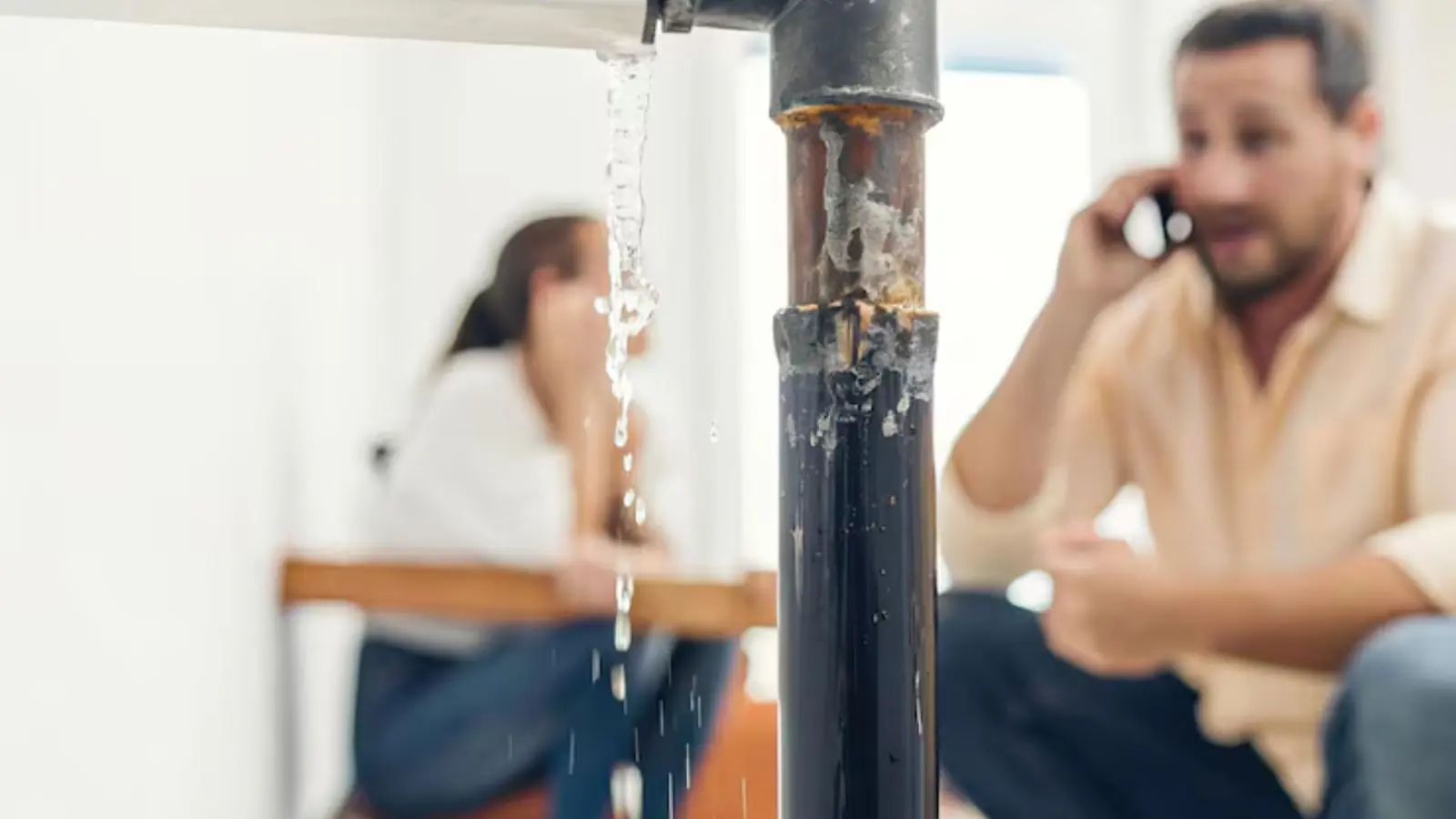
A burst pipe can put hundreds of gallons into a home in an hour, and most of the damage comes from the water that keeps running after the first splash. If a line has failed in your Dana Point house, the goal for the next hour is simple: stop the water, make the space safer and get a drying crew moving. This guide gives the order that works.
Our dispatch line is open 24/7, and same-day response is offered when crews are available. Call while you work through the steps below, because the dispatcher can adjust them to what you describe.
Minute One: Stop the Water
Close the shutoff valve for the fixture if you can see one. Under sinks and behind toilets there is usually a small oval or round handle. If the break is in a wall or ceiling, or you cannot find the fixture valve, close the main shutoff. In many homes it sits near the street, beside the garage or on an exterior wall near the water meter.
Turn the handle all the way. Then open a faucet at the lowest point in the house, such as a laundry tub or an outdoor hose bib, to let the pipes drain. That lowers pressure and helps the leak slow.
Minutes Two to Ten: Make the Room Safer
Water and electricity do not mix. If the panel is dry and you can reach it without stepping in water, turn off the breakers for wet rooms. If the panel is wet or you would have to cross standing water, stay out and call the electric utility or 911.
A ceiling that is bulging or dripping steadily is holding water and can fall without warning. Keep people and pets out of that room. If you can do it safely, a small hole poked from the edge of the bulge lets water drain into a bucket, but only if you are not standing under the heaviest part.
Minutes Ten to Thirty: Protect What You Can
- Photograph or video every wet area before you move anything.
- Lift rugs, small furniture and electronics onto dry surfaces.
- Put foil or wood blocks under the legs of larger furniture so stain does not transfer to wet carpet.
- Move paperwork, photographs and books to a dry room.
- Leave soaked drywall, insulation and carpet pad in place for the crew to measure and document.
Do not run a household vacuum on wet carpet, do not turn on ceiling fans under a wet ceiling and do not try to dry walls with a hair dryer. These steps can spread water or create a shock hazard. If you have a wet vacuum made for water, it can remove small standing amounts, but a crew will still need to measure what is behind the surface.
Pipe Already Burst?
Call the 24/7 line and tell dispatch what is wet and whether the water is off.
Why Older Dana Point Streets See These Calls
Dana Point incorporated on January 1, 1989, but its historic core is older. Lantern Village was built largely through a 1920s development, and its streets are named for ship lanterns. About 12,000 residents live in that part of the city, in homes that have seen several generations of plumbing repairs.
In houses of that age, a failed fitting often sits behind a wall that was patched decades ago. Corroded galvanized lines, old shutoff valves and soldered joints that have stressed over time are common sources. A crew can find the wet area with moisture meters and thermal imaging, and a plumber replaces the failed part.
Source type: City records and public encyclopedia entry for Dana Point, accessed October 2026.
Hour Two and After: Drying and Documentation
Once the water is stopped, the clock shifts to drying. Drywall, insulation and carpet hold water for days if they are not opened and dried, and that is when musty smells and stains start. A crew extracts standing water, measures moisture in walls and floors and sets air movers and dehumidifiers. Water mitigation is the service that covers this stage.
Keep a log of what you did and when. Note the time you shut off the water, the rooms that got wet and any calls to your insurer. Sudden and accidental water damage such as a burst pipe is often covered by homeowners insurance, though policies differ. The California Department of Insurance says insurers generally reimburse reasonable temporary repair costs if you keep receipts, so save them.
| Time since the break | Priority | Why it matters |
|---|---|---|
| First 10 minutes | Stop the water, check the panel | Less water means less drying later |
| 10 to 60 minutes | Photograph, move valuables, call | Records help a claim, moving items prevents stains |
| 1 to 24 hours | Extraction and opening wet cavities | Wet drywall and pad turn bad quickly |
| 24 to 72 hours | Drying equipment running | Readings fall toward the dry standard |
| After drying | Cleanup and repair | Rebuilding is safe once readings hold |
The timeline is a general guide, and a crew adjusts it to what the readings show.
What Happens After the Crew Arrives
The crew starts by checking where the water traveled. A pipe that failed in an upstairs wall can send water down through a ceiling, along framing and into a room that looks dry. Moisture mapping finds the full path, and extraction pulls out standing water. Wet insulation and drywall that cannot dry are removed so the cavity can breathe.
After drying, water damage cleanup removes debris and treats odor, and water damage repair rebuilds. The same steps apply in nearby towns such as San Clemente and Laguna Niguel.
Mistakes That Make a Burst Pipe Worse
Waiting until morning is the most common. Water that runs overnight can saturate subfloor and wall bottoms. Painting over a stain before readings are dry is the second, because moisture stays trapped and the stain returns. A third is assuming a dry-looking wall is dry. Cool, damp walls often feel normal to the eye.
Local Questions
Where is my main water shutoff in a Dana Point home?
Most homes have it near the street, at the garage wall or on an exterior wall near the water meter. If you cannot find it, call the line and a dispatcher can talk you through likely spots.
Should I turn off the power after a burst pipe?
Only from a dry panel, and only if you do not have to stand in water. If the panel is wet or the path is flooded, stay out and call the electric utility or 911.
Is a burst pipe covered by homeowners insurance in California?
Sudden and accidental water damage is often covered, but policies differ. Ask your insurer, keep receipts and photograph the damage before cleanup.
How soon should drying start after a burst pipe?
As soon as possible. Water that sits in drywall, insulation and pad turns bad quickly, so crews start extraction and moisture mapping right away.