
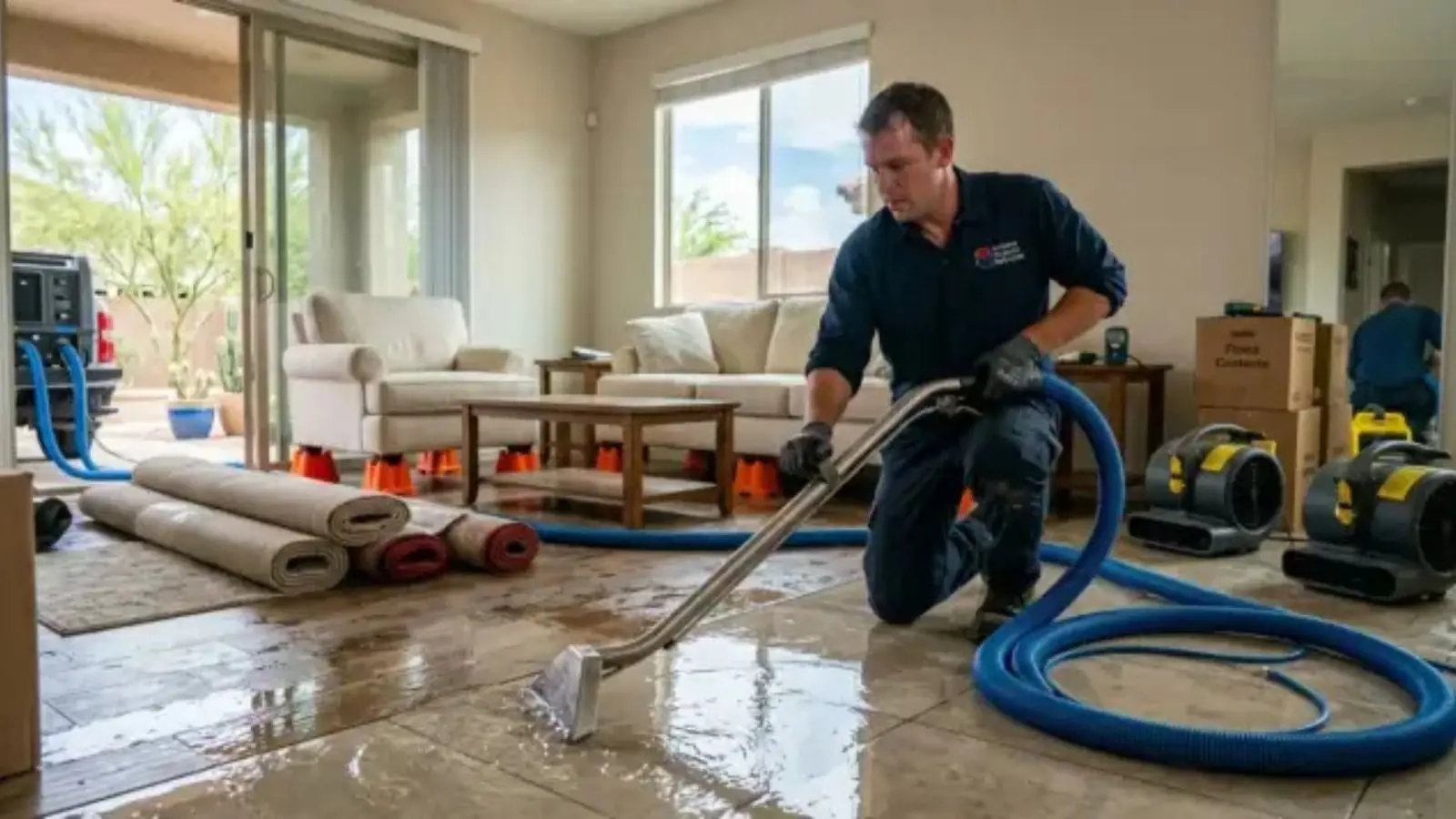
If water is standing in your living room, garage or lower level, you need it out now, not on Monday. Emergency water removal in Dana Point, CA is available 24/7, with same-day response when crews are available. While you wait, stop the source if you can, keep power off in wet areas unless the panel is dry and reachable, and move valuables up and away from the water.
Water removal, also called water extraction, uses pumps and extraction units to pull standing water from floors and carpet. It is the first physical step of a restoration job and comes before water mitigation sets up drying equipment. Hours matter, because every hour in the water adds to what has to be torn out later.
When Standing Water Is an Emergency
Any standing water inside living space is urgent. It is more urgent when it covers outlets or the base of an appliance, when it came from a sewer line or from outside, or when it is still rising. In those cases, stay out of the water, shut off power only if you can reach the panel dry and call the utility or 911 for any electrical or gas risk before you call the restoration line.
Dispatch answers at any hour, so a failed water heater at midnight or a washing machine hose that split on Saturday gets the same response as a weekday call.
Equipment Used to Pull Water Out
| Equipment | What it does | Used for |
|---|---|---|
| Submersible pump | Moves large volumes of standing water out through a hose | Deep water in garages, lower levels and crawl spaces |
| Truck-mounted or portable extractor | Pulls water out of carpet and floor surfaces by suction | Saturated carpet and flat floors |
| Wet vacuum | Removes smaller pools and corners | Edges, stairs and tight spaces |
| Squeegee and mop tools | Moves water toward the extractor | Hard floors and tile |
| Moisture meter | Confirms what is still wet after extraction | Floors, walls and subfloor |
Extraction removes the bulk of the water. Drying equipment handles the moisture that remains in materials.
Burst Pipe Water Damage
A burst pipe is the most common reason for an emergency call. Shut off the main water valve first, since the damage keeps growing while the line is live. Open a lower faucet to drain remaining pressure, and note where the water appeared. A supply line that fails under a sink, behind a washing machine or inside a wall can release a great deal of water before anyone notices.
Once the crew arrives, extraction starts at the lowest point, then moves across the floor toward the extractor. The crew then checks walls, cabinets and flooring for trapped water with a moisture meter. If the pipe was inside a wall, a section of drywall may need to open to let the cavity dry. The plumbing repair itself is a plumber's job, and the crew will tell you when one is needed.
Water extraction and drying follow the ANSI/IICRC S500 standard, which defines the water categories and sets out how drying is measured and verified. Crews use that framework to decide what can be saved, and the dispatcher explains the category before work starts.
Standing Water Right Now?
Call the 24/7 line, give your address and tell dispatch where the water is coming from.
Real Situations We Get Called For
Washer valve failure
A hose or valve gives out and the laundry room, hallway and neighboring room are soaked.
Condensate line backup
An air conditioner drain line clogs and water spills out of a closet or ceiling.
Under-sink burst
A supply line lets go and water spreads across kitchen or bath flooring and cabinets.
Crawl space or lower level
Water collects in a low area and cannot drain, which needs pumping before anything else.
Water Removal Around Dana Point
Garages and lower levels collect water first because water finds the low point. If your home is near Dana Point Harbor, Doheny State Beach or Strands Beach, the city's hazard page names high tides and storm surge as flood risks, and that water is not clean water. For flooding from outside, see flood damage restoration and check FEMA's Flood Map Service Center for your address.
Crews travel to San Juan Capistrano and the other towns we serve. Tell dispatch about gates, stairs and driveway length, since hoses and pumps need a path.
What Drives the Cost of Water Removal
Cost follows the volume and depth of the water, the water category, how far hoses must run, the number of rooms and whether drying follows. Scope and price are explained before work starts. A flat number given over the phone without seeing the space should make you cautious.
Sudden and accidental water damage is often covered by homeowners insurance, gradual leaks often are not and flood damage usually needs its own policy. Check your policy or ask your insurer, and keep photos, receipts and a log of calls.
Frequently Asked Questions
Do you handle emergency water removal at night or on weekends in Dana Point?
Yes. The line is answered 24 hours a day, every day of the year. Same-day response is offered when crews are available, and dispatch gives you safety steps while the crew is arranged.
How fast can the water be removed?
That depends on volume, depth and access. Extraction of a few rooms is often finished within a visit, but drying equipment usually stays after. The crew explains the plan on arrival.
Is it safe to walk through the water?
Not if power is on, if the water came from a sewer or the outdoors, or if it is deep. Stay out and call the utility or 911 for any electrical or gas hazard.
Do you remove water from crawl spaces?
Pumps can remove water from low or confined areas when the crew can reach them safely. Tell dispatch about access and how deep the water is.
Is water extraction the same as drying?
No. Extraction pulls out standing water. Drying removes the moisture left in walls, floors and framing, and it takes days. Both are needed.