
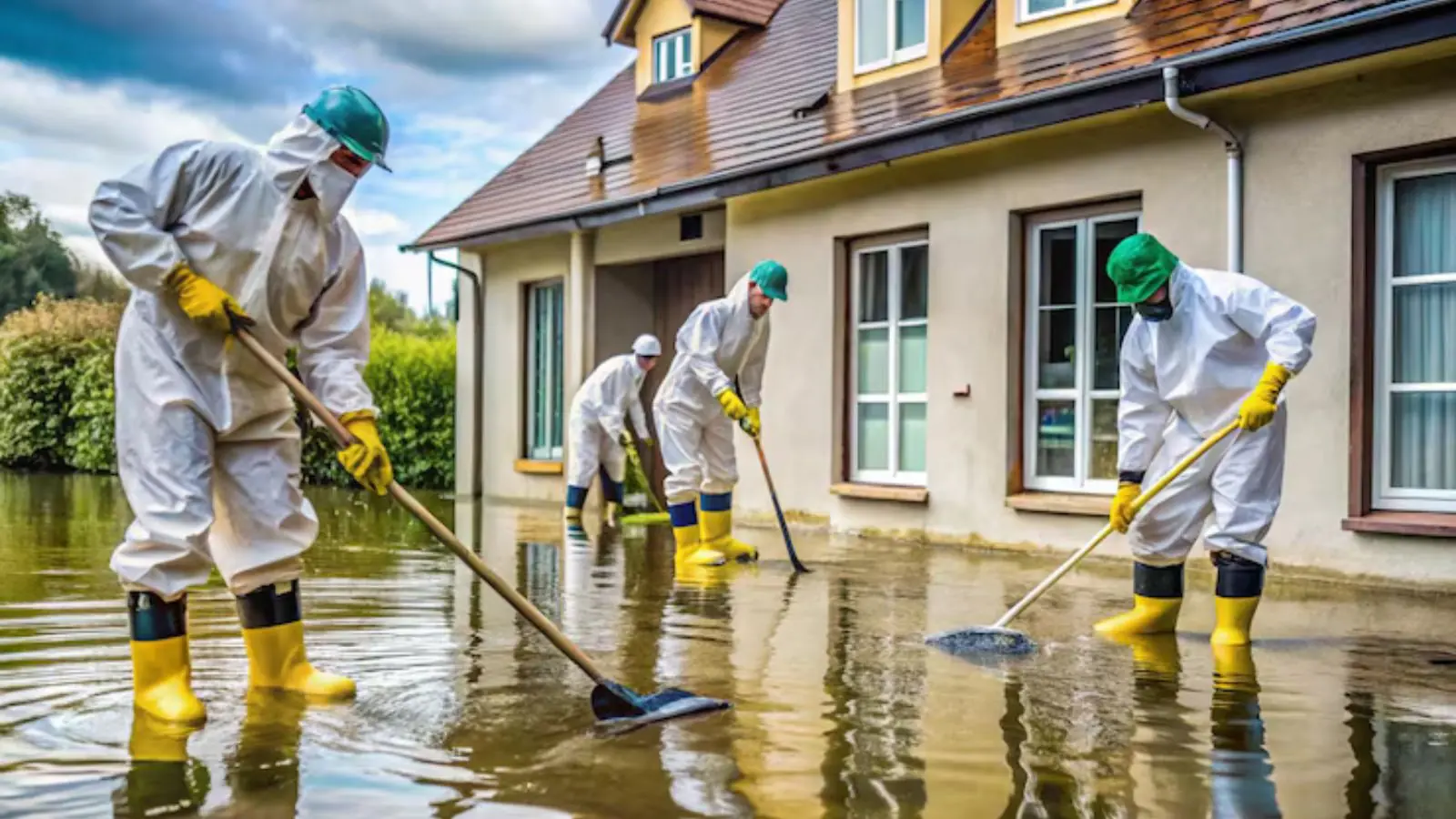
When floodwater enters a home, the problem is bigger than wet carpet. Water that comes from storm drains, tides, creeks or a sewer line carries soil and bacteria, which changes how it must be removed. Emergency flood damage restoration in Dana Point, CA is open 24/7, with same-day response when crews are available.
Flood damage restoration is the work of removing contaminated water, taking out materials that cannot be cleaned, sanitizing and drying the structure. It differs from a plumbing leak, which is usually clean water, and it is the job this page covers. For a supply-line leak, see emergency water removal.
Floodwater in the House: What to Do First
Stay out of moving or rising water and keep children and pets away from it. Do not touch electrical panels, outlets or appliances while standing in water. If you can reach the panel while dry, cut power to the affected area, and if you cannot, call the electric utility or 911 before you call the restoration line. Never run gas appliances in a flooded space.
Then call the line. Dispatch asks where the water came from, how deep it is and whether the sewer is involved, and the answers decide equipment and protective gear. Nights, weekends and holidays are covered, because storms do not arrive on a schedule.
Flood Exposure in Dana Point
The city's flood hazard page says Dana Point has inherent flood risk because of its geography and its position on the Pacific, and that high tides, storm surge and heavy rainfall can make it worse. It sends residents to FEMA's Flood Map Service Center to check whether a property sits in a flood zone and to learn about flood insurance.
San Juan Creek matters for the eastern side of the city. The city's public works page reports that new data was submitted to FEMA and approved for a map revision along the creek, and it links annotated Flood Insurance Rate Map panels 06059C0504K, 06059C0506J and 06059C0508K. If your home is near the creek, check the current panel rather than relying on an older lender document.
What the Water Source Means for the Job
| Source | Treated as | What changes |
|---|---|---|
| Broken supply line | Clean water at first | Fast extraction and drying may save drywall and carpet. |
| Rain runoff entering a door or garage | Contaminated | Porous materials are more likely to come out. |
| High tide or storm surge | Contaminated | Salt, silt and bacteria require cleaning before drying. |
| Creek or channel overflow | Contaminated | Mud and debris removal comes before drying. |
| Sewer backup | Sewage | Containment, protective gear and disposal steps. |
Floodwater is treated as contaminated until the crew confirms otherwise. The classification follows the ANSI/IICRC S500 framework.
Basement Flooding Cleanup
If your home has a basement, a sunken room or a below-grade garage, floodwater collects there first. Pumping starts with a plan, since emptying a flooded lower level too fast can stress walls and floors that the water was supporting. Crews often remove water in stages, then clear mud and silt, wash surfaces and set drying equipment.
Finished lower levels have more at stake, because drywall, carpet and insulation all sit in the water. Wet materials are cut out to a level above the waterline, and the cavity is dried with air movers and dehumidifiers before anyone rebuilds. Leave stored items that cannot be cleaned out for the crew to sort, and photograph them first.
Gurgling Drains, a Raw Smell or Water Rising From a Floor Drain
If water is coming up through a floor drain, a toilet or a tub, or the house smells like sewage, you are describing a sewage backup. The trade calls the cleanup Category 3 water work. It needs protective gear and a plan for disposal, so it is not a do-it-yourself job.
Sewage Backup Cleanup
Sewage backup is an emergency. Stay out of the area, keep people and pets away, do not flush or run water, and call the sewer agency about the line. The city's utilities page lists South Coast Water District as the sewer provider in Dana Point. Do not use outlets or panels near the water, and call 911 or the utility for any electrical risk before you call the restoration line.
The crew extracts the water, removes porous materials that sewage touched, cleans and disinfects hard surfaces and dries the structure. Carpet, pad and drywall in contact with sewage are usually discarded. The plumbing repair is a plumber's job, so the crew will tell you if one is needed.
Flooded Home in Dana Point?
Call the 24/7 line, give your address and say where the water came from.
Flood Coverage Is Different From Water Damage Coverage
Flood damage is usually excluded from a standard homeowners policy and needs separate flood coverage. A burst pipe is a different kind of loss, and sudden and accidental water damage is often covered. Check your policy, ask your agent about flood coverage and read the exclusions before a storm, because most policies do not allow you to add flood coverage after one arrives.
Keep a log of calls to your insurer and photograph the water line on walls before cleanup. The California Department of Insurance advises making temporary repairs promptly. Crews record moisture readings and photos that support the claim file.
What Drives the Cost of Flood Restoration
The scope depends on water category, depth and how long the water stood, the area and materials affected, mud and debris volume, drying days and the rebuild afterward. Scope and price are explained before work starts. After flood cleanup, water damage cleanup detail and mold remediation questions often follow, and creek-side homes in San Juan Capistrano face the same steps.
Frequently Asked Questions
Do you handle flood emergencies at night or on weekends in Dana Point?
Yes. The dispatch line is answered 24 hours a day, every day. Same-day response is offered when crews are available, and dispatch gives you safety steps while a crew is arranged.
Does homeowners insurance cover flooding?
Usually not. Flood damage is typically excluded and needs separate flood coverage, while sudden and accidental water damage such as a burst pipe is often covered. Check your policy and ask your insurer.
How do I know if my Dana Point home is in a flood zone?
Look up your address on FEMA's Flood Map Service Center. The city also posted revised Flood Insurance Rate Map panels for San Juan Creek, so check the current panel.
Water is coming up through my floor drain. What do I do?
Stay out of the area, keep people and pets away, stop using water and call the 24/7 line. Contact your sewer agency about the line, and do not touch outlets or panels near the water.
How long does drying take after a flood?
Drying is measured in days. Wet materials come out first, and equipment runs until readings reach the dry standard. Depth, duration and materials change the timeline.
Is restoration the same as flood protection?
No. Restoration cleans and repairs after water entered. Grading, drainage and flood barriers are separate work, and the dispatcher will say so plainly.