
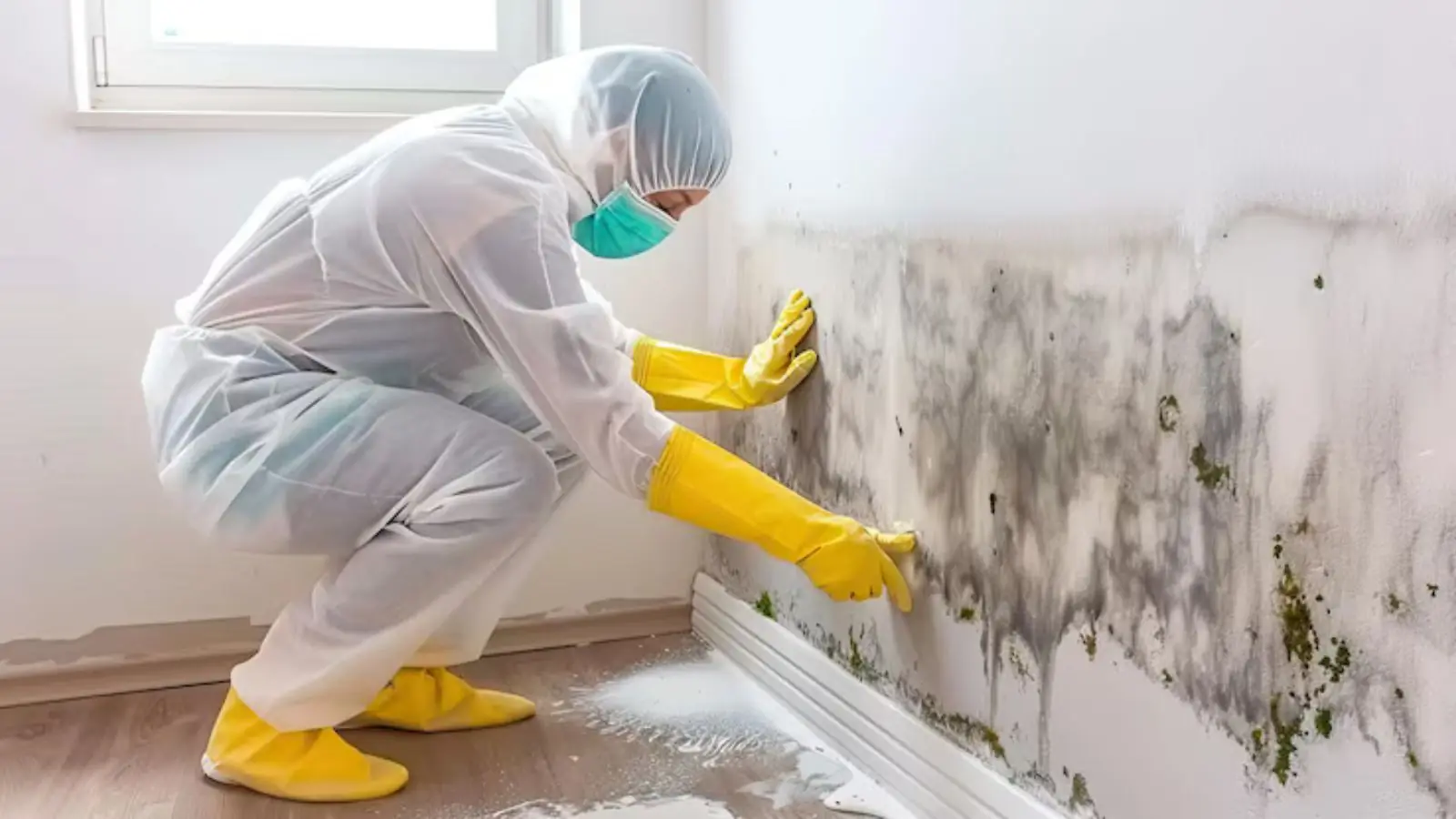
Mold remediation in Dana Point, CA is the process of containing, removing and cleaning mold growth after a moisture problem. It follows the published ANSI/IICRC S520 standard for mold remediation, and it starts by finding out why the area was wet. A mold job without a fix for the water source is only a temporary job.
Mold is a secondary service in our network, and many of the calls we hear begin with a leak: a toilet, a sink, an air conditioner condensate line, a roof or siding. Our 24/7 line takes those calls, and same-day response is offered when crews are available. Health questions about mold belong with a physician, and this page does not answer them.
Dark Spots in a Closet, a Musty Smell or a Stain That Keeps Coming Back
If you see dark spots on a closet wall, smell mustiness in a bathroom or find a stain that returns after cleaning, you may be describing a mold job. You do not need to know the trade term to call. Describe what you see, when the area last got wet and where the water might have come from, and dispatch will explain the options.
Mold Needs Moisture, So the Leak Comes First
Mold needs moisture to grow, so the first question is where the water came from. Common sources include a toilet or sink leak, an air conditioner condensate line, a roof or siding leak, a bathroom fan that vents into the attic and a wall that stayed damp after an earlier water event. Fixing the source is the plumber's or roofer's job, and the remediation crew will ask for it before work starts.
Cleaning visible mold without fixing the leak invites it back. If you have had water damage in the last few weeks, water mitigation addresses the moisture, and mold remediation addresses what grew while it was wet.
How Remediation Works
Inspect
The crew finds the growth and the moisture source and records the scope.
Contain
Plastic barriers and negative air keep spores from spreading during work.
Remove
Affected porous materials come out, and surfaces are cleaned with HEPA vacuums.
Verify
The area is checked, and clearance testing is available through an independent tester.
Mold Removal and Black Mold Cleanup
Not every dark stain is mold, and color does not tell you the species. A crew can see growth, measure moisture and tell you whether the surface can be cleaned or the material has to come out. Porous materials such as drywall and insulation are usually removed when growth has penetrated, while hard surfaces such as concrete and glass can often be cleaned.
Containment protects the rest of the house while work happens. Negative air machines with HEPA filtration pull air out of the work area, and workers wear protective gear. Dry brushing and sanding without containment spread spores, which is why do-it-yourself removal of larger areas often ends up bigger than it began.
Mold After Water Damage
Water damage that is not dried quickly is the most common path to mold. If drywall, baseboard or carpet stayed damp, ask for readings before it is painted or covered. When mold shows up after a leak, the sequence is dry the structure with water mitigation, remove affected materials and finish with rebuilding under water damage repair.
Hidden growth is possible inside walls and under flooring, so a musty smell without a visible spot is a reason for inspection and moisture readings, not a reason to guess.
What to Do Before the Crew Arrives
- Stop the water source and keep the area dry.
- Do not disturb or dry-brush visible growth, since that can spread spores.
- Keep people and pets out of the affected room.
- Do not run fans toward the area or the central air handler.
- Write down when the area last got wet and what caused it.
Testing, Inspection and Clearance
Inspection looks for moisture and visible growth. Testing, when it is used, samples air or surfaces and is read by a laboratory. Clearance testing after remediation is usually done by an independent tester, not by the company that did the removal, so that the check is a separate opinion. Ask the dispatcher what is available for your project.
Some home sales and loans ask for mold removal or a clearance report. That is a factual requirement from the buyer or lender, and no company can promise a lender will accept a particular report. If a transaction is involved, ask your agent or lender what documentation they want before the work is scheduled.
| What changes the scope | Why |
|---|---|
| Visible area | More surface means more containment and cleaning. |
| Hidden growth | Growth inside walls or under floors needs materials opened. |
| Materials affected | Drywall and insulation are removed, hard surfaces are cleaned. |
| Moisture source | An unresolved leak means work cannot finish. |
| Access and layout | Closets, attics and tight spaces take more setup. |
No exact price exists before an inspection. Scope and price are explained before work starts.
Mold After a Leak?
Call and describe what you see and when the area last got wet.
Cost, Insurance and Choosing a Company
Cost follows the same factors as the table above, plus containment and disposal. Insurance is a separate question. Sudden and accidental water damage and its resulting mold may be covered, while gradual leaks and neglect often are not, so check your policy and ask your insurer. Do not assume coverage and never assume denial.
Ask any company whether its crews work to S520, and check any contractor license on the California Contractors State License Board website. Mold licensing rules differ by state, so ask whether your state licenses mold work. The crews also serve Mission Viejo and nearby towns.
Frequently Asked Questions
Do you do mold remediation at night or on weekends in Dana Point?
The 24/7 line takes calls any hour, and same-day response is offered when crews are available. Mold work is usually planned, but a leak that is feeding growth is an emergency for the water.
Can I clean a small spot myself?
Small surface spots on hard materials are sometimes cleaned by homeowners. If the spot came from a leak, cleaning treats the symptom, so fix the source and consider an inspection.
Is clearance testing part of remediation?
Clearance testing is usually done by an independent tester after the work, so it is a separate opinion. Ask the dispatcher what is available for your situation.
My buyer's lender wants mold removed. What should I do?
Ask the lender or your agent what documentation they require before work is scheduled. No company can promise a lender will accept a particular report.
Will mold come back after remediation?
No one can promise that. If the moisture source is fixed and the space stays dry, growth has nothing to feed on. If the water returns, so can the problem.
Does insurance cover mold?
It depends on your policy and the cause. Mold from a sudden and accidental leak may be covered, and mold from long-term leaks or neglect often is not. Ask your insurer.