
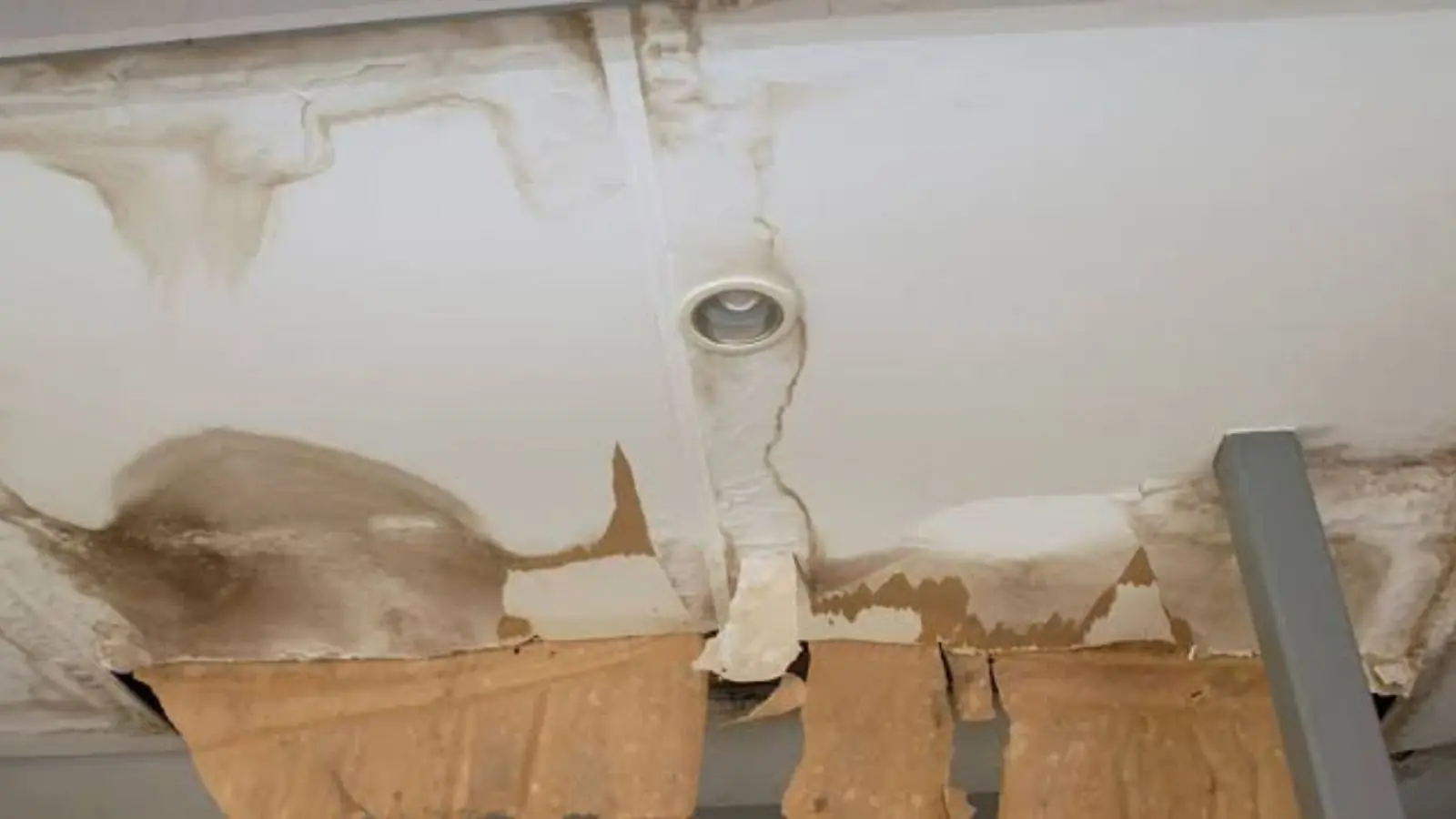
A brown or yellow ring on a ceiling after rain is a common sight in coastal Southern California. It means water got into the ceiling cavity, soaked the drywall and left minerals behind as it dried. What it does not say is whether the source was the roof, a vent, an attic pipe or an upstairs fixture.
This guide walks through how to tell the difference, what to do about a sagging ceiling and how the repair works once the leak is fixed.
Clues That Point to the Roof
Roof leaks show up when it rains and often stop when it dries. The stain is usually near an exterior wall, a skylight, a chimney, a vent pipe or a roof valley. In many cases the stain grows after each storm and fades slowly between them. Look in the attic, if you can reach it safely, for dark streaks on rafters, wet insulation or daylight around a pipe boot.
Common roof sources include cracked flashing, lifted tiles, failed sealant around vents and clogged gutters that push water behind fascia boards. A roofer finds and fixes these, not the restoration crew.
Clues That Point to Plumbing
Plumbing leaks do not care about the weather. A stain that grows on a dry week, sits below a bathroom or laundry or appears with a hissing sound suggests a supply line, drain or fixture. Water bills that jump without a reason are another sign, and so is a musty smell in a closet near the stain.
If you suspect plumbing, turn off the water to the upstairs fixture and see whether the stain stops growing. A plumber can pressure-test lines to confirm. For a plumbing leak, water mitigation handles the drying that follows.
| What you notice | More likely | First check |
|---|---|---|
| Stain grows only during rain | Roof, flashing, gutter or window | Attic and roof edges |
| Stain grows in dry weather | Plumbing, HVAC condensate | Upstairs fixtures and the air handler |
| Stain near a bathroom | Supply line, drain or tub | Shutoff valves and caulk |
| Ring stain with a bulge | Water pooled above the board | Keep out and call a crew |
| Stain near an exterior wall | Roof edge or window | Gutters and window seals |
The table is a starting point. A crew or roofer confirms the cause.
Ceiling Wet or Sagging?
Call the line. Keep people out of the room and place a bucket under the drip.
Rain Comes in a Short Season
Dana Point averages about 12 inches of rain a year, and nearly all of it falls between November and March. After months of dry weather, the first storms test every roof, flashing and window seal at once, so a stain that appears in winter may have been waiting since the last rain.
The National Weather Service has issued flood watches for all Orange County cities including Dana Point, warning of excessive runoff, and the city's flood hazard page names heavy rainfall as a factor in local flooding. A storm that tests the roof can also push water against doors and low walls, so check both.
Source type: Public climate summary for Dana Point, National Weather Service flood watch notice and City of Dana Point flood hazard page.
A Sagging or Bubbling Ceiling Needs Care
A ceiling that bulges holds water and can fall. Keep people out of the room, place a bucket underneath and, if you can do it safely, make a small hole at the lowest point so the water drains in a controlled way. Do not stand under the bulge.
A crew can open the ceiling, remove wet insulation and board and set drying equipment in the cavity. Skipping this step and painting over the stain traps moisture, and the ring often comes back.
How the Repair Works
Once the source is fixed and the cavity is dry, damaged drywall is cut out, new board is installed and the seams are taped, textured and primed. A stain-blocking primer keeps the old mark from bleeding through, and the ceiling is painted. Water damage repair covers this stage, and matching texture is usually possible but not exact.
If the ceiling stayed damp, ask for moisture readings first and consider a mold check, since mold remediation is the follow-up when growth appears. The same steps apply in Laguna Beach and San Clemente.
Crews dry the cavity to the ANSI/IICRC S500 standard before any patch goes up, which is why readings come before paint.
What to Photograph Before Anything Is Touched
Take wide photos of the room and close photos of the stain, the ceiling around it and any dripping. Note the date and the weather, and record a short video if the stain is active. If you can safely see the attic, photograph the wet insulation or rafters. These images help the crew, the roofer and your insurer see how the damage developed.
Insurance and Timing
Sudden and accidental water damage from a storm or a plumbing failure is often covered by homeowners insurance, while long-term leaks and neglect often are not. Report the damage promptly and keep receipts for temporary repairs such as tarps. The California Department of Insurance says insurers generally reimburse reasonable temporary repair costs, but it also advises you not to make extensive permanent repairs before the adjuster has assessed the damage.
Local Questions
Is a ceiling stain after rain always a roof leak?
No. Rain can point to the roof, but plumbing, condensate and window leaks also show up near storms. A crew or roofer confirms the cause.
Can I just paint over a ceiling stain?
Only after the source is fixed and moisture readings are dry. Painting over a wet ceiling traps water, and the stain usually returns.
What if the ceiling is bulging?
Keep people out, place a bucket underneath and call. A bulge holds water and can fall without warning.
Who fixes the roof?
A roofer does. The restoration crew handles drying and the interior repair once the leak is stopped.