
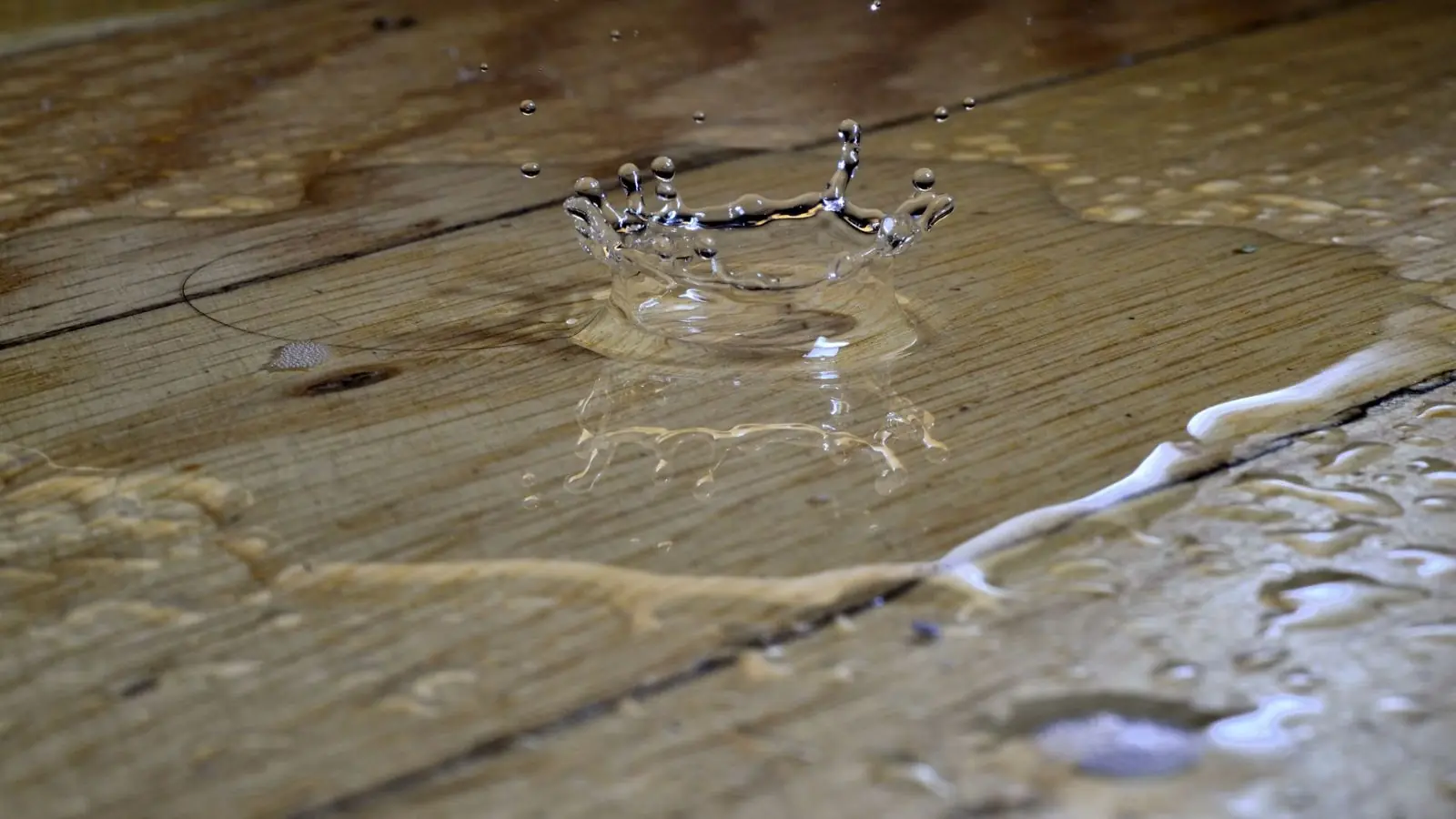
Cupping is when the edges of hardwood boards rise higher than the center, so the surface looks like a row of shallow troughs. It happens when the bottom of a board takes on more moisture than the top. After a leak, an appliance failure or high humidity, cupping is one of the first signs that water reached the floor.
The good news is that many cupped floors flatten as they dry. The bad news is that sanding too early can lock in the damage. This guide explains what to do, in what order, for Dana Point homes with hardwood.
Why Boards Cup
Wood is hygroscopic, which means it absorbs and releases moisture from its surroundings. A leak from above or the side soaks the top and edges. Moisture rising from a slab or crawl space soaks the underside. Because wood swells with water, the wetter side expands more and pushes the board into a curve.
A dishwasher that leaked for a week, a refrigerator line, a planter that was overwatered and a water heater near a hallway are all common sources. Even after the leak stops, the board may continue to move for days as moisture redistributes.
What To Do in the First Days
- Stop the source and photograph the floor.
- Remove rugs, mats and furniture that trap moisture.
- Call a crew to extract water and measure moisture in the boards and subfloor.
- Let dehumidifiers and air movers run as the crew sets them. Specialized floor drying mats may be used.
- Do not sand, refinish or seal the floor until readings are stable.
Floor Wet or Cupping?
Call the line to start extraction and moisture readings.
Older Spanish-Style Homes at Capistrano Beach
In 1928, a Doheny corporate entity bought lots at Capistrano Beach, and Luther Eldridge built Spanish-style houses with red-tile roofs there. Some of those and later homes in the area have wood floors over crawl spaces or raised foundations.
In a coastal neighborhood, moisture from below can be as important as water from above, because humid air moves under a raised floor. When a floor cups without an obvious leak, a moisture reading of the subfloor and a look at the crawl space can show whether the source is below.
Source type: Public encyclopedia entry for Dana Point and Capistrano Beach history.
Does the Floor Need Replacing?
| Condition | Likely path | Why |
|---|---|---|
| Mild cupping, readings falling | Wait and monitor | Floor may flatten as it dries |
| Cupped but dry, still uneven | Sand and refinish | Flattening by sanding works when dry |
| Crowning, with peaks in the center | Wait, then reassess | Often from sanding too early after cupping |
| Buckling or lifting | Remove and replace | Boards have separated from the subfloor |
| Black staining or soft boards | Replace affected area | Water sat long enough to damage the wood |
A flooring contractor makes the final call after moisture is stable.
Why Sanding Too Early Backfires
If you sand a cupped floor while it is still wet, you flatten the high edges. As the floor dries, those flattened edges drop, and the center rises, which is called crowning. The floor may then need a second repair. Waiting for stable readings, often over several weeks, avoids that.
A crew can document readings so you know when the floor has reached equilibrium. If water damage affected more than the floor, water damage repair includes the baseboards, drywall and finish work around it.
Other Flooring After Water
Laminate and engineered wood swell and often cannot be saved when the core board gets wet. Tile and sealed concrete usually clean up well. Carpet over wet pad is removed in most cases. The same moisture readings apply to each, and water mitigation covers the first stage.
How Moisture Readings Guide the Decision
A pin or pinless moisture meter reads the water content of wood. A crew compares readings on the cupped floor with a dry reference from a board in an unaffected room, and checks the subfloor from below if there is a crawl space. When readings match across several visits, the floor has stopped moving and a flooring contractor can judge whether to sand.
Humidity matters too. A hygrometer that shows indoor humidity between about 30 and 50 percent is a common target for wood floors. If the number is far above that, a dehumidifier can help the floor settle before any repair.
Moisture targets for wood follow the drying approach in the ANSI/IICRC S500 standard, which compares readings with a dry reference from the same home.
Cost Drivers for Floor Repair
The cost of repairing hardwood depends on the area, the wood species, whether boards can be sanded or must be replaced, and how well new boards match the old. Staining and finishing add steps. No fair number exists until someone has seen the floor, and scope and price are explained before work starts.
Protecting Hardwood Going Forward
Fix the leak source, keep indoor humidity steady, use a dehumidifier in damp seasons and check dishwasher and refrigerator lines. In Laguna Beach and San Clemente, where coastal air runs humid, a hygrometer helps. If damp spots keep returning, ask about mold remediation readings.
Local Questions
Will my cupped floor flatten on its own?
Sometimes. Many floors flatten as they dry, which can take weeks. Wait for stable moisture readings before deciding on sanding or replacement.
Can I sand right after the leak is fixed?
Not until the floor is dry. Sanding a wet floor can cause crowning when it dries.
Why is my floor cupping with no visible leak?
Moisture can rise from a slab or crawl space, especially in coastal neighborhoods. Readings of the subfloor and a crawl space check can find the source.
Does laminate recover like hardwood?
Usually not. Wet laminate often swells permanently and needs replacement.