
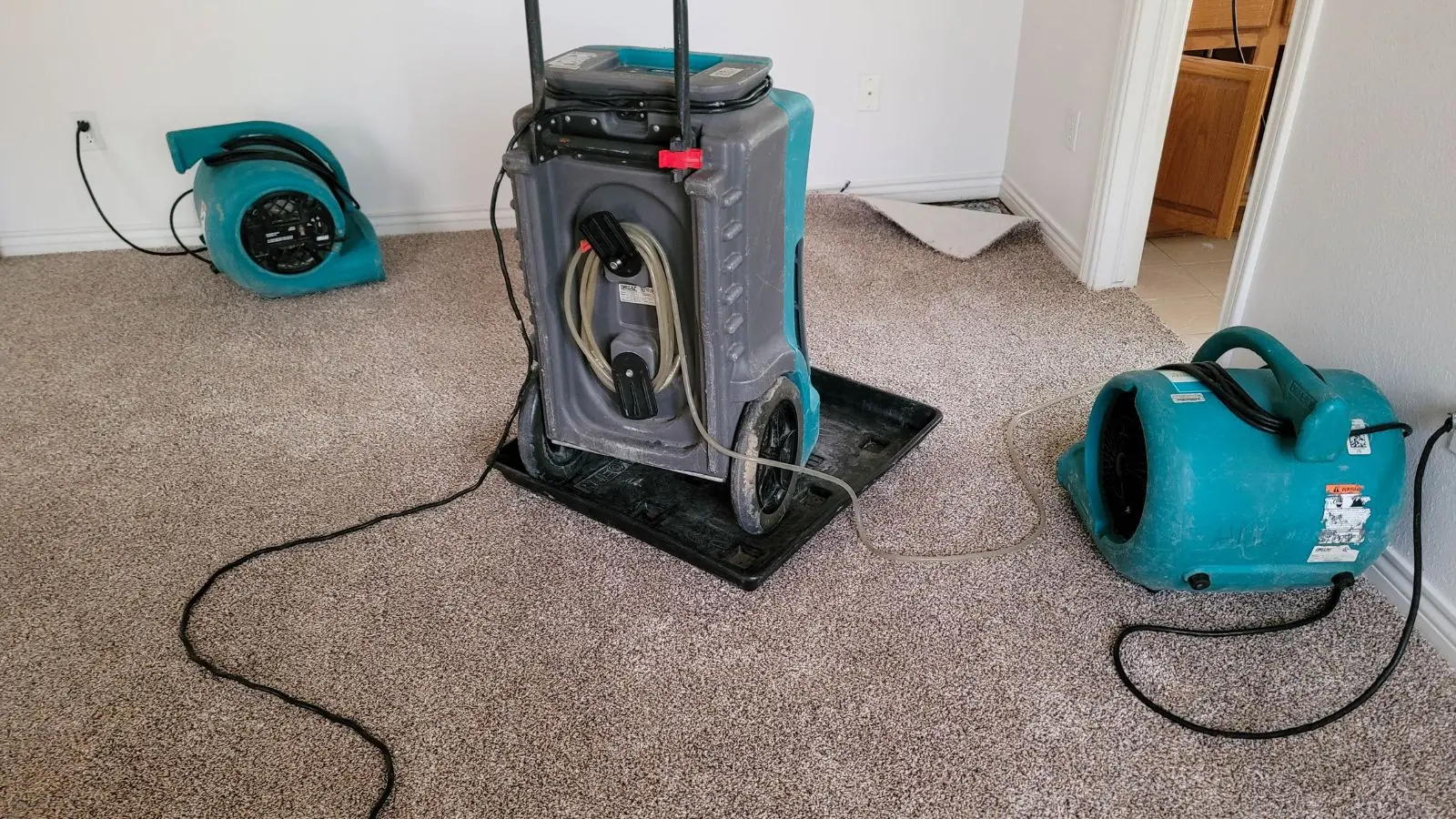
People often ask how long the fans will run. The honest answer is that it depends on the materials, how far the water traveled and how wet the building was when drying started. Many jobs take about three to five days of equipment time, and some take longer, but a good crew measures instead of guessing.
This article explains what sets the timeline, what the equipment does and how to tell when a Dana Point home is truly dry.
What the Clock Is Actually Measuring
Drying is not finished when surfaces feel dry. Wood framing, subfloor and drywall hold moisture inside, and the reading that matters is the moisture content of those materials compared with a dry reference from an unaffected part of the same home. Crews take daily readings and record them, so you can see numbers fall toward the dry standard.
That reference matters in coastal Dana Point. Marine air keeps indoor humidity higher than in a desert, so a dry standard here is set from your own unaffected materials, not from a generic number.
Factors That Lengthen or Shorten Drying
| Factor | Effect on drying | Why |
|---|---|---|
| How fast extraction started | Faster start, shorter job | Less water soaks into materials |
| Material type | Hardwood and plaster dry slowly | Dense materials release water slowly |
| Water category | Contaminated jobs take longer | More material is removed and rebuilt |
| Area and depth | More wet area, more equipment | Air movers and dehumidifiers scale with volume |
| Humidity and airflow | High humidity slows evaporation | Dehumidifiers pull moisture from the air |
| Hidden cavities | Wet walls dry slowly if closed | Cavities may need to be opened |
Timelines vary, and readings show progress each day.
Need a Drying Plan?
Call the line to start extraction and moisture mapping.
The Equipment and What It Does
Air movers push air across wet surfaces to speed evaporation. Dehumidifiers, including low-grain refrigerant units and desiccant models, remove the moisture from the air so it does not settle back on walls. Moisture meters and thermal imaging cameras show where the water is, and HEPA air filtration is used when contamination or dust is a concern.
Equipment is placed by measurement. A room with a small wet area may need two air movers, while a hallway with wet carpet and wall bases may need more. Crews move equipment as readings change, which is why you may see units shifted from day to day.
Why the First 24 to 48 Hours Matter
The US Environmental Protection Agency says that in most cases mold will not grow if wet or damp items are dried within 24 to 48 hours. It also says carpet and backing should be dried within 48 hours, and that upholstered furniture may be hard to dry in that time and may need a restoration professional.
Dana Point gets about 12 inches of rain a year, nearly all of it between November and March. That means roof and window leaks cluster in a few months, and a wet wall in January can sit until spring if no one checks it. Early readings and early drying shorten both the job and the risk.
Source type: US Environmental Protection Agency guidance on mold and moisture, and public climate summary for Dana Point.
A Typical Timeline
- Day 0: source stopped, standing water extracted, wet materials identified.
- Day 1: equipment placed, first moisture readings logged.
- Days 2 to 3: readings fall, equipment adjusted, hidden wet spots opened if needed.
- Days 3 to 5: readings approach the dry standard, a final check is taken.
- Equipment out: only after readings hold at the standard.
How You Know It Is Dry
Ask for the readings. A crew should be able to show you numbers for affected materials alongside the dry reference. Dry means the numbers match, not that the surface looks fine. If a crew removes equipment without giving readings, ask for them before the wall is closed, because rebuilding over a wet cavity is the most common reason stains and smells return.
Once drying is done, water damage cleanup and water damage repair follow. If a closed wall stayed damp, ask about mold remediation before painting.
When Drying Takes Longer Than Expected
A job can stretch when a hidden wet area is found on day two, when a wall cavity was closed and has to be opened or when rain returns and raises humidity. Hardwood floors and plaster can need extra days, and a second wet area may mean more equipment. None of these are failures. They are reasons the daily readings exist, and a crew should tell you what changed and what the new plan is.
Slow drying is also a signal to look for the cause. A wall that will not dry may still be receiving water from a slow leak or from wet insulation above. Finding that source is better than running equipment longer, and the crew may recommend a plumber or roofer before drying continues.
What to Do While Equipment Runs
Do not unplug units, do not open windows unless the crew says so and do not stack items against wet walls. Keep children and pets away from cords.
What Residents Can Do to Help
Keep doors and windows closed while equipment runs unless the crew says otherwise, because open air from outside works against dehumidifiers. Do not unplug units to save power or move them to use an outlet. Keep children and pets away from cords and hot exhausts. The crews also serve Laguna Niguel and San Juan Capistrano.
Local Questions
How many days will equipment run in my home?
Often about three to five days, but readings decide. Dense materials and hidden cavities can take longer.
Can I turn off the equipment at night?
Ask the crew first. Stopping drying can let moisture settle back, and it can lengthen the job.
Why does a dehumidifier run in a coastal home?
Marine air carries moisture, so dehumidifiers pull it out so walls and floors can release water instead of reabsorbing it.
How do I know it is dry before the wall is closed?
Ask for moisture readings that match your home's dry reference. A surface that feels dry may still hold moisture inside.