
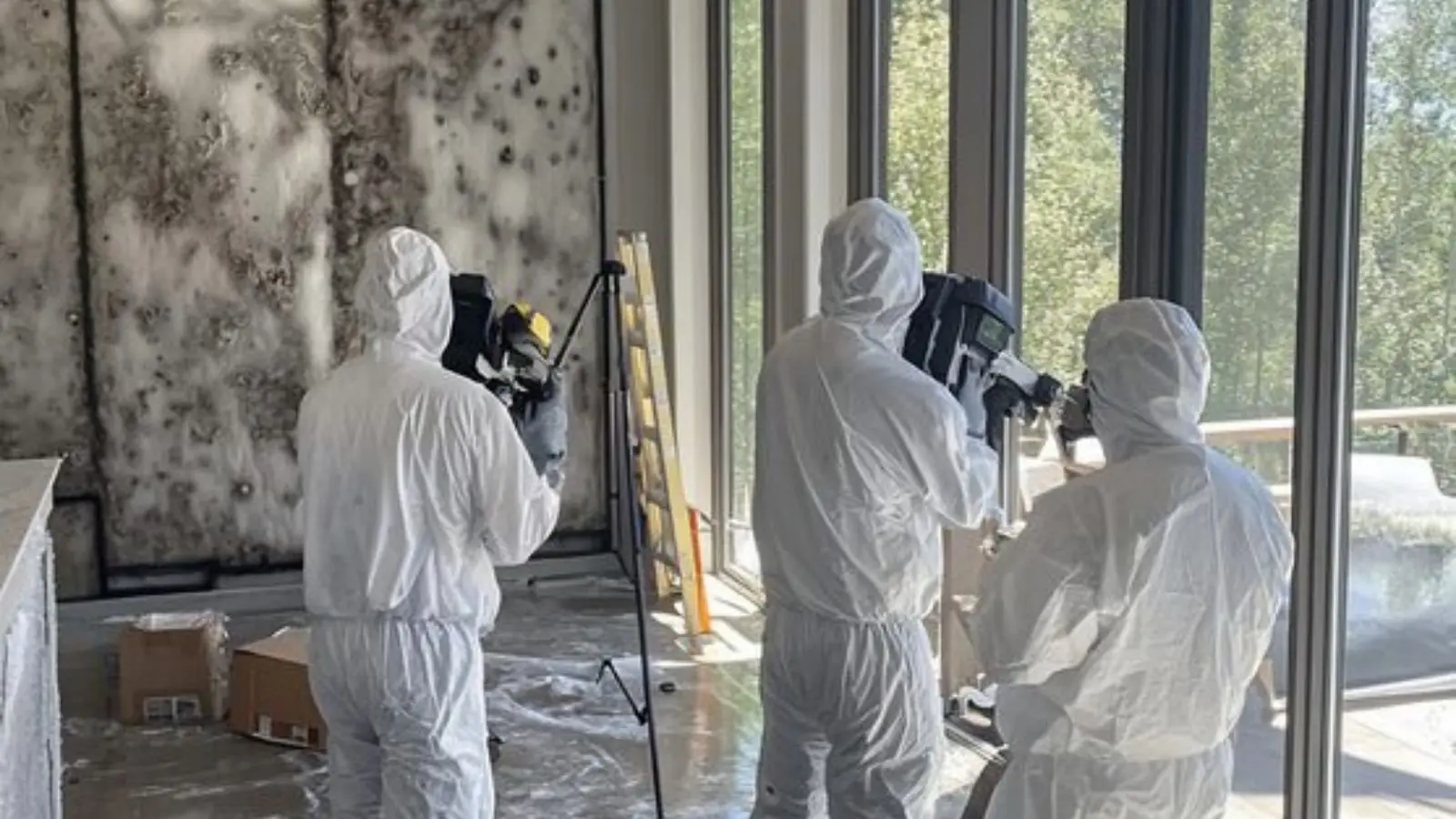
After mold removal, you may hear the term clearance testing. It means a check, usually by an independent party, that the work area is clean and the remediation met its goals. People ask for it when they are selling a home, when a lender wants documentation or when they simply want a second opinion.
This guide explains what clearance testing is, what it can and cannot tell you and how it fits with the steps before it. It does not give medical or health information.
The Sequence Behind Clearance
Clearance comes last. The sequence starts with finding and fixing the moisture source, then containing the work area, removing affected materials, cleaning surfaces with HEPA vacuums and drying the space. The remediation follows the ANSI/IICRC S520 standard. Only after those steps does a clearance check make sense.
If the leak is not fixed, a clean result today does not mean much, because growth can return when moisture returns. That is why the moisture source gets the first conversation on any mold call.
What Clearance Can Include
- A visual inspection for remaining growth, dust or debris in the work area.
- Moisture readings of the affected materials and nearby areas.
- Air or surface samples sent to a laboratory, when the tester chooses them.
- A written report with the tester's findings.
Planning Mold Work?
Call and describe the area. Dispatch can explain how clearance fits in.
Why an Independent Tester
Clearance is usually done by a party other than the remediation company, so that the check is separate from the work. It is the same reason a building inspector is not the builder. Ask the dispatcher what is available for your project, and ask your agent or lender what they accept.
No company can promise that a lender or buyer will accept a given report. If a transaction is involved, ask the other side what documentation they want before work is scheduled, so you do not pay for the wrong one.
Selling or Buying in Dana Point
The City of Dana Point's Help for Homeowners page says the city has no grandfather clauses for unpermitted work and that the current owner is responsible for resolving it, even after a foreclosure, short sale, flip or probate sale. The city recommends checking the permit history before close of escrow.
That advice applies to mold work too when walls were opened and rebuilt. If drywall was cut out and replaced, ask whether the repair needed a permit, and keep paperwork showing what was done and by whom. A buyer's inspector often asks for it, and a clean paper trail makes a sale simpler.
Source type: City of Dana Point Help for Homeowners page, accessed October 2026.
| Question | Remediation crew | Independent tester |
|---|---|---|
| Removes mold and affected materials | Yes | No |
| Provides containment and cleaning | Yes | No |
| Checks the result | Reports on its own work | Provides a separate opinion |
| Typically produces a lab report | Not usually | May, if sampling is used |
| Fixes the leak | No, plumber or roofer does | No |
Roles overlap in some companies, so ask who does what.
What a Result Does and Does Not Mean
A passing result means the tester found the work area consistent with the standard they used on the day of the test. It does not mean the home can never have mold again. Moisture can return through a new leak, high humidity or a failed repair. Ask the tester what they measured, which method they used and how to read the report.
Many homeowners keep the report with their home records. If you sell, you may be asked to disclose past mold or water damage. California sellers have disclosure duties, so ask your agent what applies instead of relying on this page.
Questions to Ask Before You Book
Ask whether the crew works to S520. Ask what the containment plan is and how the area will be cleaned. Ask what the clearance process is and who performs it. Ask for the scope in writing, including what will be removed. Check any contractor license with the California Contractors State License Board, which advises homeowners to verify licenses and get a detailed written contract.
What Homeowners Can Do While They Wait
Keep the area dry and ventilated, fix any new leaks quickly and avoid storing damp items in the space. Do not seal the area with paint before the final check. If you notice a smell or spots returning, tell the tester or the crew right away, because early notes help them find the cause.
How This Fits With Water Damage Work
Most mold jobs follow a leak. Water mitigation dries the structure, mold remediation removes growth and water damage repair rebuilds. Clearance sits between the last two. If you are in Laguna Niguel or Laguna Beach, the same sequence applies.
Local Questions
Is clearance testing required in Dana Point?
Not as a general rule that this page can point to. It is often requested by buyers, lenders or homeowners. Ask whoever needs it what they require.
Can the remediation company do its own clearance?
Some do, but an independent tester provides a separate opinion. Ask your agent or lender what they accept.
Does a pass mean mold will not return?
No. It reflects conditions on the test day. If moisture returns, so can growth.
Do I need a permit when drywall is cut out and replaced?
Permit rules vary by project. Ask the Dana Point building division, and keep records of who did the work.