
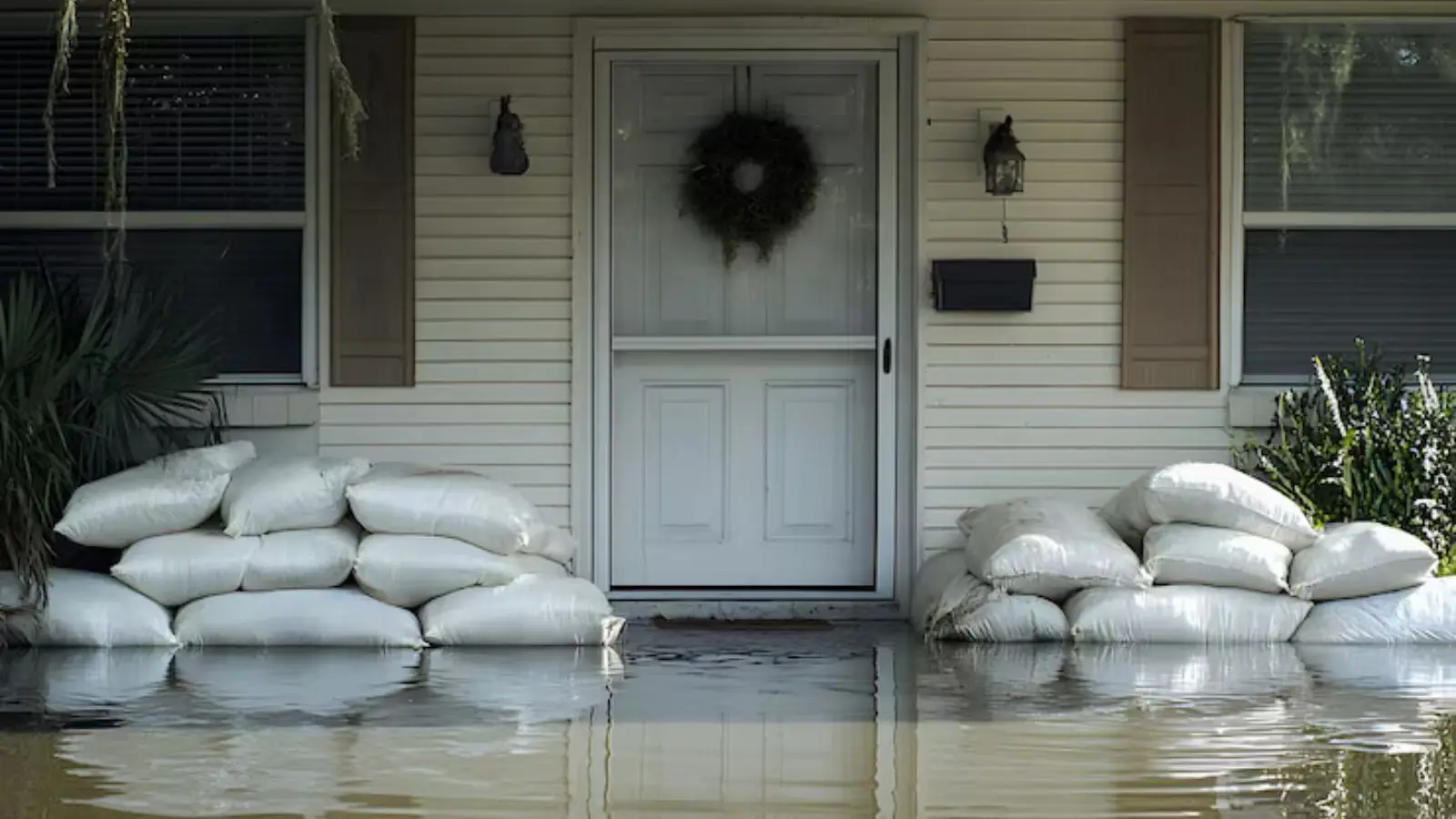
Storms in Southern California come in a few strong bursts, and most homes are not built for the amount of runoff a heavy one can deliver. Water finds the lowest door, the garage threshold, the window well or the roof edge. A short checklist before the storm costs little and can keep a restoration call from happening.
This guide covers what to check, what to do the day before and what to do if water gets in anyway. It is general guidance, and the city and the National Weather Service are the right sources for alerts.
Walk the Property Before the Rain
- Clear gutters, downspouts and roof valleys of leaves and debris.
- Make sure downspouts discharge away from the foundation and not toward doors or garage.
- Check that yard drains and area drains are open.
- Look at the seals around windows and doors for gaps or cracks.
- Inspect roof flashing, vent boots and tile for lifted or broken pieces.
- Move valuables off the garage floor and away from low walls.
Garage Doors and Low Entries
Garage doors are the most common entry for runoff. A worn bottom seal lets water in at the threshold, and a driveway that slopes toward the door sends water straight to it. A new seal or a threshold seal costs little compared with cleaning a flooded garage.
Low entries and sunken patios behave the same way. If your home has a door that opens near grade, consider a temporary barrier on storm days. Sandbags or a flood barrier panel can divert water if they are placed correctly and overlap properly.
Water Already Getting In?
Call the 24/7 line. Stay clear of electrical panels and standing water.
Flood Watches and Sandbags in Dana Point
In August 2023, the National Weather Service issued a Flood Watch covering all Orange County cities including Dana Point, warning that excessive runoff could flood rivers, creeks, streams and other low-lying and flood-prone locations. Sandbags were available at local fire stations, and the Orange County Fire Authority website lists their locations.
The City of Dana Point's flood hazard page names high tides, storm surge and heavy rainfall as events that can worsen flooding and encourages residents to learn evacuation routes, keep an emergency kit and check FEMA's Flood Map Service Center for flood zone information.
Source type: National Weather Service flood watch coverage, Orange County Fire Authority information and City of Dana Point flood hazard page.
| Weak point | Check | Fix |
|---|---|---|
| Garage threshold | Bottom seal, driveway slope | Replace the seal, add a threshold barrier |
| Sliding doors | Track weep holes | Clear the tracks of debris |
| Roof valleys and flashing | Debris, lifted flashing | Clear and repair before the season |
| Window seals | Cracked caulk | Reseal |
| Downspouts | Discharge toward the house | Extend away from the foundation |
A short walk-around can find most of these.
The Day Before a Forecast Storm
Charge phones and flashlights. Know where the main water shutoff and the electrical panel are. Move cars off low spots. Put photographs and papers in a high, dry place, and take photos of the home's condition for your records. Pick up sandbags if the city or fire authority is distributing them, and keep a list of emergency numbers handy.
If Water Gets In
Stay out of moving water, keep away from electrical panels in wet areas and photograph the damage. Do not run fans on floodwater, since it is treated as contaminated. Call the restoration line for extraction and drying. Flood damage restoration and emergency water removal cover that work.
Flood damage is usually excluded from standard homeowners policies, so ask your insurer about flood coverage before the season. Sudden roof leaks and plumbing failures are treated differently, and your policy decides.
Roofs, Gutters and Slopes
Roofs are the first line of defense. Tile roofs depend on flashing and underlayment, and a cracked tile or a lifted valley can let water through for years before a stain appears. Gutters that overflow dump water at the foundation, and downspouts that end near a door send it inside. A roofer can inspect before the season, and the cost is small compared with interior repair.
Slopes and planters matter too. Soil that grades toward the house, a planter bed against the wall and a patio that tilts to the door all move water to the wrong place. Re-grading is a landscaping job, not a restoration job, but knowing which areas collect water tells you where to put sandbags.
Emergency Kit Basics
- Flashlights, batteries and a charged battery pack.
- A list of numbers: utility, insurer, plumber and the restoration line.
- Copies of policy numbers and a photo inventory of valuables.
- Work gloves, boots and heavy-duty trash bags.
- A way to shut off water and power, and knowledge of where each is.
After the Storm
Check ceilings for stains, attics for wet insulation and the base of walls for damp spots. A stain that appears a few days later may mean water is still moving through a cavity. Ask for moisture readings before you paint, and plan water damage repair only after the structure is dry. Residents of Laguna Niguel and San Clemente can follow the same checklist.
Local Questions
Where do I get sandbags near Dana Point?
In a past flood watch, sandbags were available at local fire stations, and the Orange County Fire Authority website lists locations. Check current availability before a storm.
Is a garage threshold seal worth it?
Often yes. A worn seal is a common entry for runoff, and replacing it costs little compared with cleanup.
Should I run a fan on floodwater?
No. Floodwater is treated as contaminated, and fans can spread it. Wait for crew guidance.
How do I check whether my address is in a flood zone?
Use FEMA's Flood Map Service Center, which the city links from its flood hazard page.